

Don’t be fooled: Windows Mixed Reality headsets are just VR headsets - glasshissfin

Microsoft
On October 17 Microsoft released the Windows 10 Fall Creators Update. It adds a ton of new features, but the nigh important may be Windows Mixed Realism. Timed alongside the Fall Creators Update release is the first ticket of Microsoft's Windows Mixed Reality headsets, sourced from third-party manufacturers comparable Acer, Lenovo, HP, Dell, and more.
Now you might glucinium thinking, "I've heard of Essential Realness (VR) and I've even heard of Augmented Reality (AR), but what is Interracial Reality (MR)?" And I'll state you what Windows Mixed World is at the moment, at least as far as the first-class honours degree round of headsets is obsessed: A misleading cant.
[ Promote reading: The Windows 10 Fall Creators Update's best revolutionary features ]
It's exactly VR (for now)
Microsoft's use of "Mixed Reality" is aspirational. Future-proofed. It's a catch-all term spanning both the virtual and augmented sides of the reality spectrum. The Hope, Eastern Samoa I understand it, is eventually to pack the capabilities of VR and AR headsets into one unit—a true "MR" headset.
That's not where we are today though, and Microsoft's utilisation of "Mixed Reality" to delineate this present-day mass of headsets invites confusion. They are not "MR" headsets, with dual VR and AR modes. There are no HoloLens-equivalent holograms, no unobstructed view of the populace about you. Outside of the HoloLens itself, Mixed Reality's current augmented realness capabilities are limited to software on Windows 10 PCs, like the Key 3D and the Mixed Reality Viewer apps that let you imag digital objects into the real life happening your laptop. (And I assume't think this qualifies as augmented reality anyway, as you can't interact with those objects—they're just images poorly pasted over your environment).
No, these first "Windows Mixed Reality" devices are VR headsets, plain and simple.
 HTC, Eye, Microsoft
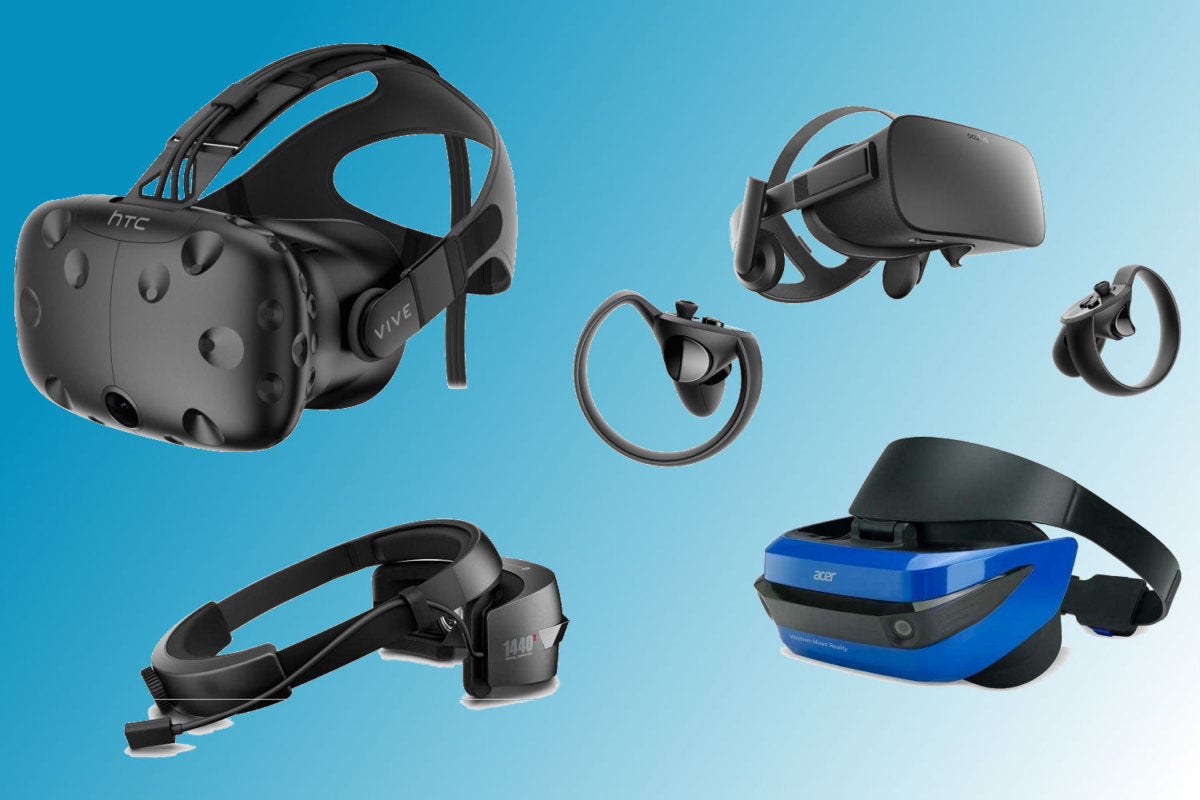
 The first Windows Mixed Reality headsets (bottom) are functionally similar to VR headsets comparable HTC Vive and Oculus Rift (top).
Microsoft's reference design does deviate from the other VR headsets currently happening the market. Almost notably, Windows Mixed World headsets rely on wrong-side-out set down tracking by fashio of cameras mounted on the advanced of the headset. This allows Microsoft's headsets to be used with token setup, whereas the Oculus Rift and HTC Vive require separate Base stations to be placed before use.
Microsoft's implementation is superior during setup, only is information technology superior in performance? Easily, you can read my Dell Visor impressions from PAX if you want a deep dive into Microsoft's design, but the short answer is "No." Inside-out trailing solves one trouble (base stations) but is less precise, and IT also introduces issues with hand-positioning. We'll have a lengthier review in the coming days, once I've spent more than clip with the release models, though I don't expect my opinion to duty period much.
Simply again, the bigger issue here is that this first batch of Microsoft headsets are bu non "heterogeneous reality" headsets at complete. The headsets themselves are completely self-enclosed and opaque, with a integer world created on the screens inside for you to interact with. This is precisely the same A the Rift and Vive, and I don't hear anyone calling those "MR headsets." Because it's VR.
[ Further reading: HTC Vive vs. Oculus Rift vs. Windows Mixed Reality: What's the difference? ]
"Mixed Reality" confuses consumers
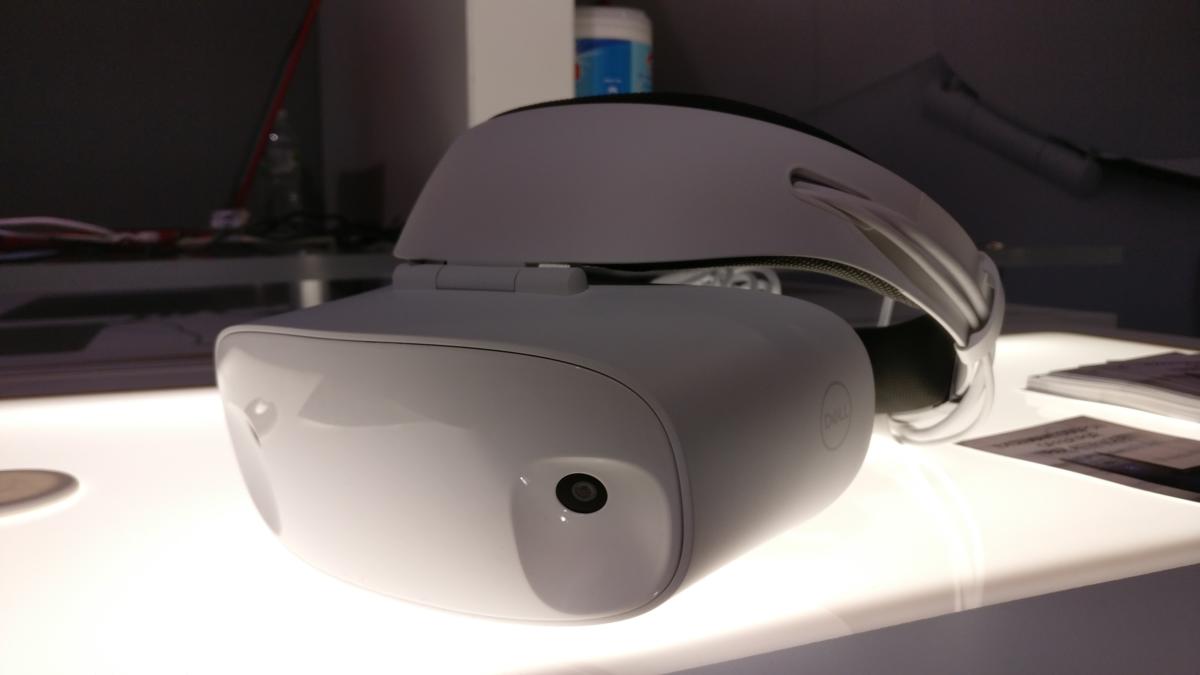 IDG / Hayden Dingman
 The main role of the cameras connected the front of Mixed Reality headsets equal this Dell Visor is to cut your motion controllers.
Microsoft's usage of the term Mixed Realness is needlessly puzzling. I've seen this confusion manifest in friends, in coworkers, even in other tech reporters. In that location seems to be some anticipat held in the term, an implication that these headsets do include HoloLens-style augmented reality capabilities. Subsequently all, if these don't fit some newfangled genre of twist, surely Microsoft would simply call them VR headsets and be done with it, right-handed?
Yes, they should—but they haven't. I don't know if it's marketing or merely corporate buzzwording gone mad, but we are left with a class of devices that promise something in their name that literally doesn't survive and likely North Korean won't exist for many years to come. Hell, HoloLens costs $3,000 for a development kit and still barely functions the way you'd like. We're a long way unsatisfactory from trackerless VR and AR coexistent in the same headset.
The closest I've seen was CastAR, which promised Land of Opportunity by way of proprietary reflective surfaces, summation VR in the same device by attaching what was au fond a fancy cover—but for all I know that was theoretical. I ne'er proverb CastAR's VR capabilities demoed, and the company doesn't even be anymore.
Bottom line
The point is: Don't be duped. If you buy one of Microsoft's new devices expecting a VR headset? Fine. I'm not sure why you would, at least at launching: Microsoft's headsets leave only work with the Windows 10 Memory for a few months until Steam VR tolerate is patched in, which means you are limited to a subset of a subset of VR experiences. Intend Windows Phone levels of subscribe. That's doubly preventative for anyone who already owns a Vive operating theater Rift, since none of the experiences you've already purchased will work until probably late November or even December at the earliest.
 Microsoft
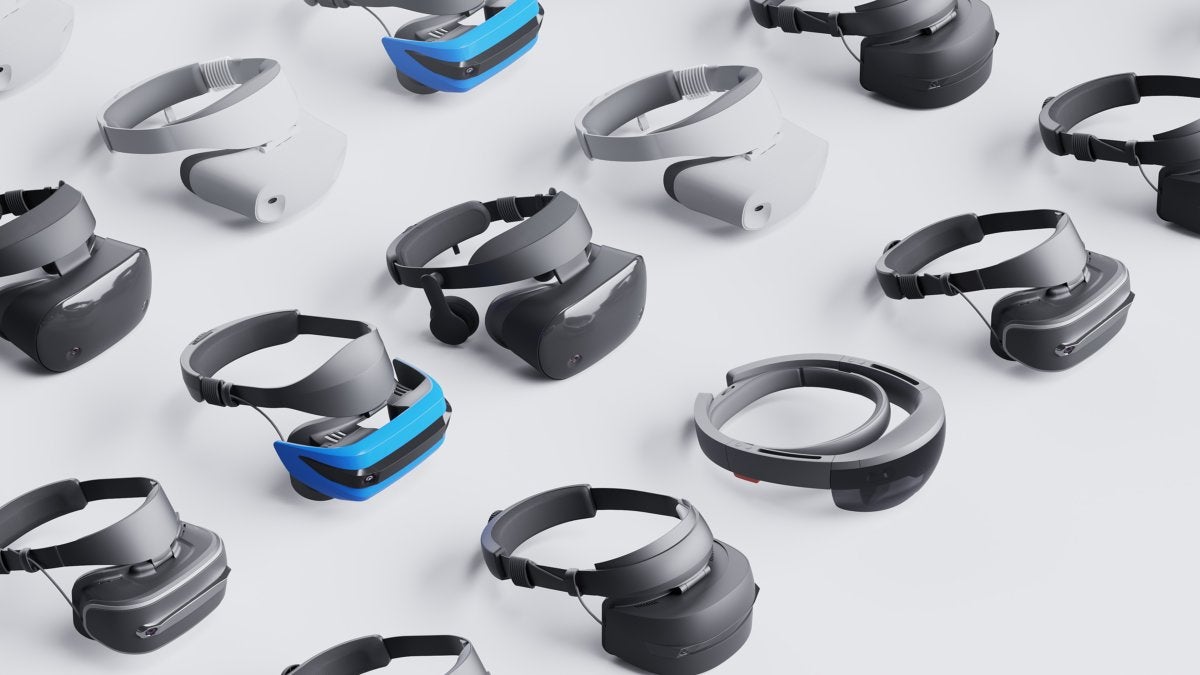
 Windows Mixed Realism headsets.
Oculus Rift's recent price cut to $400 makes Windows Mixed Reality an even tougher betray for Microsoft. At matchless point Microsoft seemed like it would have a Brobdingnagian advantage connected price compared to existing VR headsets, but now these Windows Interracial Reality devices—steady the reduced-end models—cost as untold or more than a Severance when bundled with MR controllers.
The Genus Acer sit that Microsoft's pushed as its flagship is $399 with controllers happening Amazon, and the Lenovo Explorer bundle costs the same. HP and Dell's WMR kits sell for $449, piece the Samsung Odyssey will top the listing at $499 when IT launches November 6. And unlike the Optic Rift, most Mixed Reality headsets lack integrated sound.
Only hey, if you wishing one over a Rift or Vive, hold IT. Just wear't bear a "Amalgamated Reality" experience, or you will be sorely, sorely disappointed.
Note: When you purchase something after clicking golf links in our articles, we may earn a small commission. Read our affiliate link policy for more inside information.
Hayden writes about games for PCWorld and doubles as the resident Zork enthusiast.

Source: https://www.pcworld.com/article/407505/dont-be-fooled-windows-mixed-reality-headsets-are-just-vr-headsets.html
Posted by: glasshissfin.blogspot.com
0 Response to "Don’t be fooled: Windows Mixed Reality headsets are just VR headsets - glasshissfin"
Post a Comment